Are these coatings really greener?
This is a question many in the industry are asking, and the BIO-SUSHY consortium is trying to give them a clear answer. We focus on more than just removing harmful substances like PFAS. We use a thorough, science-based approach to measure our environmental impact throughout the project.
Life Cycle Assessment (LCA) is central to this process. We follow ISO 14040 and ISO 14044 standards which are dedicated to LCA and rely on trusted LCA databases for accuracy. LCA gives us solid evaluation of CO2 emission, toxicity, and resource use (between other environmental categories). These results support our environmental claims and provide professionals with the precise, reliable data they need.
Why “PFAS-Free” is Only the First Step
Getting rid of persistent pollutants is important, but real sustainability means more than just a label. Indeed, a full life cycle sustainability assessment (LCSA) includes three aspects: environmental (LCA), economic (LCC) and social (S-LCA), and this is what is performed within the BIO-SUSHY project.
LCA works like a green balance sheet, adding up the full environmental impact of a product from raw materials extraction to disposal. For BIO-SUSHY, this allows us to demonstrate that our coatings are a better choice.
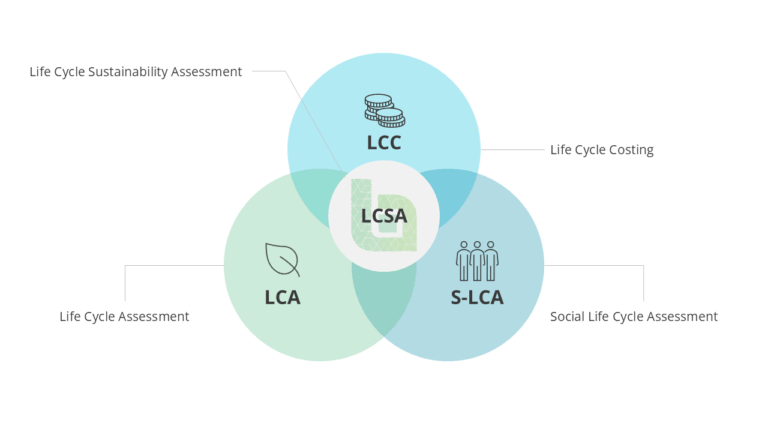
Figure 1: Overview of the Life Cycle Sustainability Assessment and its components.
A Journey Through a Coating’s Life: The LCA Lens
So, what does this journey look like for a BIO-SUSHY coating?
The LCA examines three key stages:
- Sourcing Raw Materials
- We prioritize bio-based materials, which are renewable, unlike the petroleum used in conventional coatings. This reduces the fossil carbon footprint at the source, and most of the sol-gel products are solvent-based while BIO-SUSHY targets a significant decrease of solvent use, i.e., for the textile case study, we have a 100% water-based sol-gel, and for the glass packaging, we have decreased the amount of solvent by partial replacement with water.
- The Production Process
- For the textile case study, we look at the energy, water, and chemicals used during manufacturing. One big benefit of our hybrid sol-gel technology is that it cures at lower temperatures than traditional methods. While standard processes often need temperatures over 200°C, ours works well at much lower heat.
- The End-of-Life: Composting, Recycling and Disposal
- We design with the end in mind. Our ultra-thin coatings are less intrusive, making coated products easier to recycle. For paper-based food trays, our PFAS-free coatings are a game-changer, enabling safe composting or recycling without leaving a toxic legacy in the soil or paper pulp. By being PFAS-free, we also prevent the release of toxic substances into the environment at the end of a product’s life, moving us closer to a safe circular economy.
The Proof Is in the Numbers
An LCA provides hard data to compare BIO-SUSHY coatings to conventional PFAS-containing references. It is the base of the Safe and Sustainable philosophy, for which the scoring system is based on the improvement between an appropriate benchmark and BIO-SUSHY solution. Our preliminary assessments consistently highlight four key advantages: up to 65% reduction in CO2 emissions (for glass packaging), a decrease of ozone depletion and particle emissions for all our coatings, and an improvement in the resource uses.
- A Toxicity Victory: The elimination of PFAS and other hazardous substances means a reduced risk to human health.
- A Lighter Carbon Footprint: By using bio-based precursors, we significantly cut climate change impacts associated with raw material production.
- Resource Wisdom: We rely on renewable resources, decreasing our dependence on finite fossil fuels.
Designed for a Circular Future
We consider a product’s end-of-life from the start. Our bio-based coatings fit well with circular economy models. They don’t add harmful chemicals, still there are challenges. Recycling systems differ around the world, and biodegradation depends on local conditions and composting facilities. To keep moving forward, we need to keep working with industry partners and stakeholders to solve these issues and support sustainable progress.
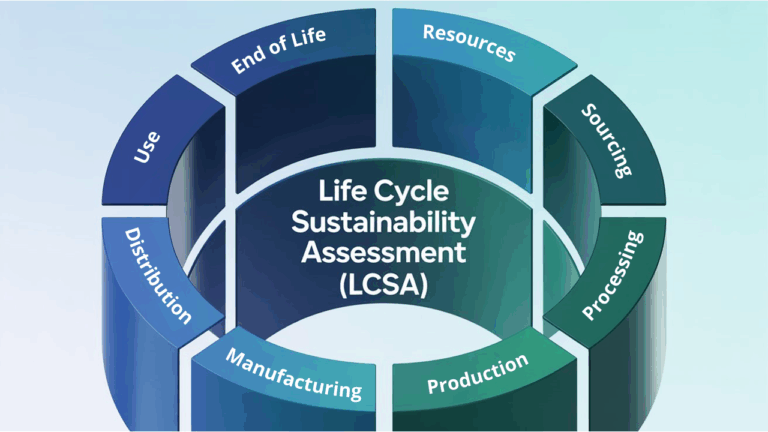
Figure 2: An LCA covers all the steps of our PFAS-free coatings development.
Taking the Economic Aspect into Account
The LCC or economic LCA will soon be studied and will define the economic viability of the solutions proposed in the BIO-SUSHY project. It will also be possible to add the environmental costs of coatings to their development/implementation costs.
Taking the Social Aspect into Account
LCA does not end with the assessment of environmental or economic aspects. In the BIO-SUSHY project social issues are also taken into account with a social-LCA (S-LCA) to create a holistic view on sustainability. S-LCA helps identify social hotspots and topics in the value chain relevant to key stakeholder groups. Results show that workers are an important stakeholder group affected, but also consumers, actors in the value chain, local communities, and society. Concerning the three application scenarios it was shown that health and safety, product quality, product price, working conditions, local community topics and innovation are important social topics.
A risk analysis also revealed significant social risks in global production countries (for textiles, plastics for food trays, and cosmetic glass), including poor labor rights, child labor, and hazardous working conditions. In contrast, a shift to a European production scenario shows considerably lower social risks.
Figure 3: BIO-SUSHY uses LCA to build a greener future where coatings protect products without harming the planet.
Leading the Way in Green Innovation
The BIO-SUSHY project goes beyond just meeting regulations—we want to set a new standard. Our work supports the goals of the European Green Deal and the Circular Economy Action Plan by giving industries a proven, high-performance option that is safer and more sustainable. Our products are also part of industry pilot projects, and we work with respected partners to ensure our innovations are tested and validated, demonstrating our commitment to quality and openness.
What This Means for Brands and Consumers
The implications of this rigorous environmental accounting are profound:
- For textile brands: You can offer strong, water repellency without worrying about the release of harmful molecules, resulting in reduced water pollution.
- For glass packaging brands: You can favor the reuse of glass packaging that matches your sustainability goals and appeals to eco-minded customers. The added coating reduces cosmetic waste and results in more environmentally friendly packaging.
- For food packaging producers: You can finally provide effective grease and water resistance for trays and containers, ensuring they are truly compostable or recyclable, meeting both consumer demand and stringent upcoming regulations on single-use plastics and PFAS.
- For everyone: This helps us all make better choices. By asking for transparency and proof from life-cycle assessments, we can support technologies that really protect the planet and are also socio-economically sustainable
Conclusion: Transparency is the New Standard
At BIO-SUSHY, we back up our promise of sustainability with real data. Life Cycle Assessment keeps us accountable and demonstrates that our PFAS-free coatings represent a significant step toward a cleaner, safer, and more sustainable future. We’re not just making better coatings; we’re building trust with every step.